
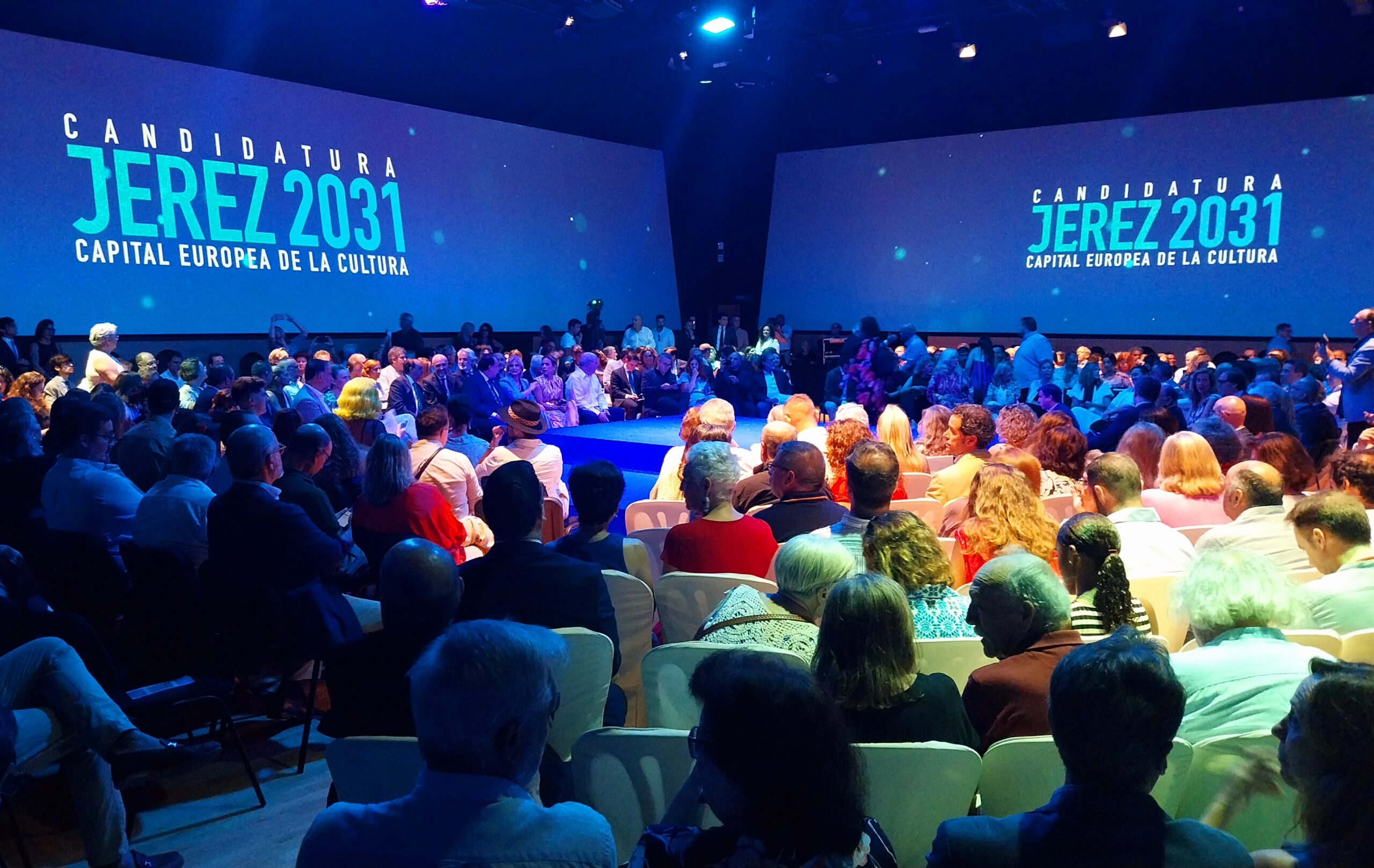
<p>The city of Jerez officially presented its candidacy to become the European Capital of Culture in 2031 at a mass event supported by a broad representation of the province’s cultural and social fabric, institutions, international representatives from previous candidacies, as well as members of the project’s Steering Council, made up of the Jerez City Council, the Cádiz Provincial Council, the University of Cádiz, and the Jerez Chamber of Commerce.</p>
<p>The event, held at the Atalaya Museums with more than 300 people from all sectors in attendance, also marked the launch of the participation strategy so that citizens can join the candidacy process through the Adherence Manifesto hosted at www.jerez2031.com. At the same time, individuals and organizations can submit their cultural ideas and projects in the “Call for Expressions of Interest” section.</p>
<p>During its development, it included testimonies from the Romani writer and cultural manager, Joaquín López Bustamente; the CEO of Opium, an organization specializing in European candidacy processes, Carlos Martins; the Director of Institutional Culture of the Greek city of Elefsina, Angeliki Lampiri; and the cultural expert from the City of Faro, a city that was a candidate in the 2027 edition, Bruno Inácio. In addition to contributing their experience, they offered their unique perspective on the process now underway by the Jerez candidacy.</p>
<p>During the official presentation, testimonial videos were shown from people connected to the city who are involved in a wide variety of cultural activities with transformative potential. These included Oussama Bouad, a Moroccan skateboarding instructor; Sandra Moreno, a cultural promoter primarily through social media; Denna Citrón, a Jerez-based artist who is the herald of the 2024 Pride Festival; Willy Pérez, a winemaker; and Suzanne Zellinger, an Austrian-born flamenco critic and cultural manager.</p>
<p>In addition, members of the #Jerez2031 Governing Council participated in the public presentation of the bid: the Mayor of Jerez, María José García-Pelayo; the President of the Provincial Council, Almudena Martínez del Junco; the President of the Jerez Chamber of Commerce, Javier Sánchez Rojas; and the Rector of the University of Cádiz, Casimiro Mantell.</p>
<p>In her speech, Mayor María José García-Pelayo presented the strength of a collective challenge that will transform the city through culture and defended the opportunity to rethink Europe from the south, from a territory that is an example of multicultural integration and coexistence. “We are firmly committed to a cultural, innovative, job-creating, sustainable, rural, inclusive, and social Jerez. These are the goals and objectives of our strategy as a city,” she stated.</p>
<p>For her part, the President of the Provincial Council, Almudena Martínez del Junco, emphasized that Cádiz is a province that is home to a diverse and inclusive culture.</p>
<p>”This province is ready to host major events of international significance, and we have been demonstrating this.” “We have the experience, the determination, and a great deal of enthusiasm to make 2031 the year of culture in Jerez and the rest of the province,” he stated.</p>
<p>The Rector of the University of Cádiz, Casimiro Mantell, stated that “we want to be part of this project, contributing to the design and planning of the candidacy file. A commitment that goes beyond mere corporate social responsibility, our vocation for public service, or interaction with all the stakeholders in our environment. To achieve this, we can count on the more than 6,000 people who make up the dynamic and qualified university community of the UCA Jerez Campus.” An essential campus for a city strategy that prioritizes the ecosystem and heritage where assets and values such as wine, land, culture, and flamenco converge.”</p>
<p>The president of the Jerez Chamber of Commerce, Javier Sánchez Rojas, explained that the candidacy is an “opportunity to implement strategies that ensure a lasting cultural, social, and economic impact for the future development of Jerez and its surrounding area,” recalling that “the vocation to embrace the entire territory has been clear from the beginning.”</p>